October 5, 2026
Staged Accidents Are Rising in New Jersey and New York
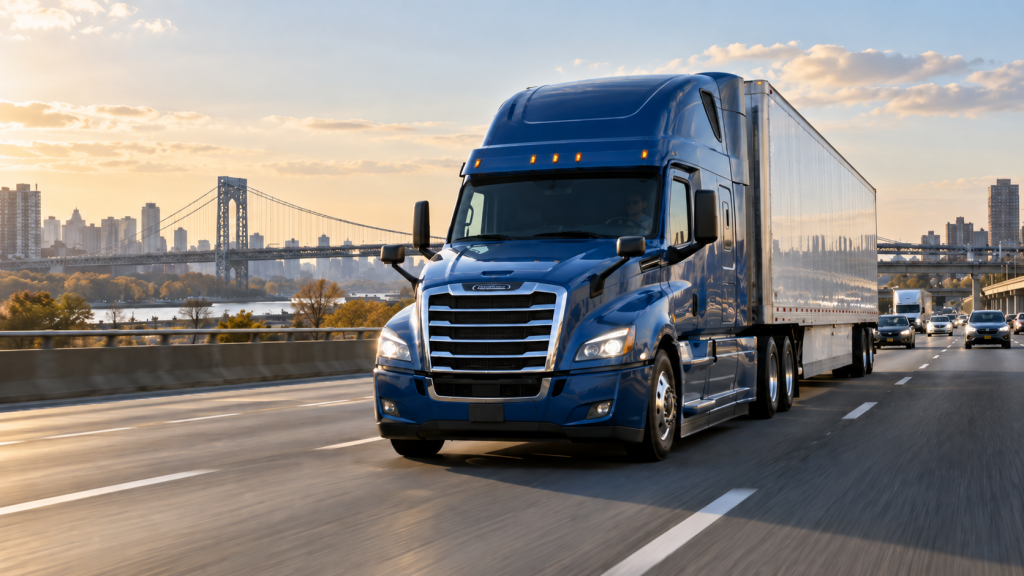
Trucking companies operating in or through New Jersey and New York are facing a growing and costly threat, and it isn’t a new regulation or a spike in fuel prices. It’s staged accidents.
One of the top underwriters in the country has recently flagged a notable rise in significant reserve increases tied to claims in these two states that exhibit characteristics consistent with suspected staged accident activity, so more claims are coming in that look less like accidents and more like setups. And the trend is serious enough that carriers are advising insureds domiciled in, or regularly operating through, New Jersey and New York to pay close attention.
Staged Accidents Are Already Being Prosecuted
Recent cases in both states show how these schemes target commercial vehicles, and how courts and prosecutors are responding.
In September 2026, Queens prosecutors sentenced the ringleaders of a staged-crash operation that deliberately caused a string of highway collisions across New York City. According to Carrier Management, the scheme involved a lead vehicle directing a second car to suddenly brake or reverse into unsuspecting drivers, after which accomplices would feign injury and funnel claims through specific medical clinics. One of the collisions was engineered against a tractor-trailer driver on the Nassau Expressway. It’s a reminder that commercial vehicles are being deliberately targeted, not just caught in the crossfire.
Earlier in 2026, a New York Supreme Court judge in Suffolk County went a step further, voiding insurance coverage entirely for eight staged collisions involving box trucks. Per Transport Topics, the court found that all eight crashes occurred roughly 45 days after policy issuance, that every claimant had obtained coverage through the same broker, and that nearly all of them funneled through the same two medical offices and the same attorney, which is a textbook fraud ring structure. The judge’s ruling was unambiguous: staged crashes do not constitute “legitimate occurrences” under a policy, and insurers have no obligation to pay out on them.
New Jersey has its own active caseload. The state’s Office of the Attorney General has charged multiple “crash and buy” rings, where defendants purchase a policy after a vehicle is already damaged and then file a claim for the earlier incident, a scheme prosecutors call “one of the most common insurance fraud scams in the country.” These cases, along with the New York prosecutions, point to the same conclusion: organized fraud rings are treating the region’s roads, and the vehicles on them, as a business model.
Why Trucking Companies Are a Target
Commercial vehicles are attractive targets for staged-accident schemes for a straightforward reason: trucking companies are assumed to carry higher liability limits and are often viewed by fraud rings as a more reliable payout than a claim against an individual driver. That assumption, paired with the broader “nuclear verdict” environment already pushing commercial auto premiums higher, means a single successful staged claim can be expensive, and a pattern of them can meaningfully affect a carrier’s loss history and renewal pricing.
The Best Defense: Forward-Facing Cameras
The single most effective tool fleets have against staged-accident fraud is video. A properly installed, fully operational forward-facing camera captures exactly what happened in the moments before impact: a sudden, unexplained stop; a vehicle cutting in front and braking hard; a “swoop and squat” maneuver designed to force a rear-end collision. That footage is often the difference between a drawn-out, costly claim and one that gets closed quickly because the facts are indisputable.
A few things worth checking now, especially for fleets that run in or through New Jersey and New York:
- Confirm cameras are recording, not just mounted. A dash cam that isn’t powered correctly, has a full storage card, or has a cracked or obstructed lens provides no protection when it matters.
- Make sure footage retention policies are long enough to cover the window between an incident and a claim being filed, since staged-accident claims aren’t always reported immediately.
- Train drivers to recognize the warning signs of a staged setup: vehicles that brake for no visible reason, cars that cut in and immediately slow down, or multiple occupants who seem to coordinate their reactions after a minor impact.
- Report anything that looks suspicious to your insurance carrier or broker right away, rather than waiting to see if a claim materializes. Early documentation strengthens the eventual defense.
The Industry Is Fighting Back
This trend hasn’t gone unnoticed at the federal level. The bipartisan Stop Auto Fraud Act of 2026, introduced in the House in September by representatives from New York, Texas, New Jersey, and California (with a companion bill in the Senate), would make deliberately staging or fabricating a motor vehicle crash a federal crime. The bill has drawn support from the American Trucking Associations, the Truckload Carriers Association, and the Truck Renting and Leasing Association, a sign of how seriously the industry is taking the problem. Coverage from The Trucker notes that the Insurance Information Institute estimates fraud schemes like these already cost consumers roughly $300 a year in higher premiums.
What This Means for Your Fleet
If your company is domiciled in New Jersey or New York, or regularly runs freight through either state, this is a good moment to have an internal conversation about camera coverage, driver training, and claims-reporting habits — ideally before a staged claim puts them to the test. The underwriting community is watching this trend closely, and fleets that can demonstrate strong video documentation and proactive fraud awareness are in a far better position, both in an individual claim and at renewal.
If you want help reviewing your fleet’s camera program, driver training materials, or claims-reporting process in light of this trend, your Reliance Partners team is glad to help you take a closer look.
Sources
- New York Staged Crash Ringleaders Sentenced Carrier Management
- N.Y. Judge Backs Insurer in Staged-Crash Scheme Transport Topics
- Fighting Back Against Truck Accident Fraud and Why Visibility Matters FreightWaves
- Bipartisan Bill Would Make Staged Crashes a Federal Crime The Trucker
- Six New Jersey Residents Charged with “Crash and Buy” Insurance Fraud NJ Office of the Attorney General
